

Sustainable hotel supplies: less plastic, shorter routes
A hotel room does not create its waste with the guest, it creates it at the moment of purchase. Every film bag, every miniature bottle and every slipper in a plastic pouch was ordered once. This page shows where that can change, which materials and packaging we work with, and what the guest actually holds in their hand.
Where plastic comes from in a hotel room
Six places in a standard room where plastic is generated with every arrival. None of them is big, but each one is multiplied by the number of rooms and the guest turnover.
The amenity tray
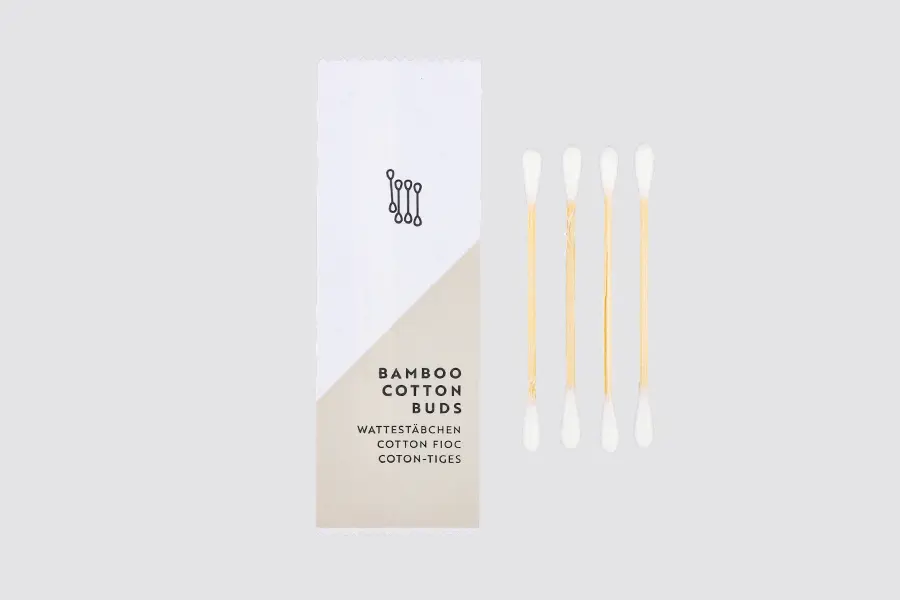
Cotton pads, cotton buds, sewing kit and nail file usually come in individual film bags. The content weighs a few grams, the wrapper is what remains.
The shower
Miniature bottles of shampoo, shower gel and lotion. Half full, they end up in the bin because the next arrival calls for a new bottle.
The wardrobe
Slippers in a plastic pouch, plus laundry bags made of film that are replaced after a single use.
The bathroom
Shower cap, toothbrush with a plastic handle, comb made entirely of plastic: each item in its own bag.
The bedside table
Remote control bags and hygiene bags, changed with every guest.
The case
What the guest never sees: the outer packaging the goods arrive in. Ordering full cases instead of small quantities saves the most packaging per piece here.
The order of things: First the items that are changed every day, that is amenities and slippers. Then what stays and gets washed, such as cotton laundry and shoe bags. The dispenser follows as soon as the bathroom is refitted.
Five levers you can pull one at a time
No property changes everything at once. Each lever works on its own, and each one is backed by items in our warehouse.
Packaging
Paper sachet or paper bag instead of a film bag, paper band instead of outer packaging on wellness slippers. The item stays the same, only the wrapper changes.
Material
Toothbrush with a bamboo handle, comb made of wood or with 35 percent straw, cotton buds with a paper or bamboo stem, soles made of sugarcane, cork or coconut fibre.
Dispensers instead of miniatures
A 300 ml wall dispenser replaces the miniature bottles, refilled from a 5 litre canister. What that looks like in the bathroom is on the page about the dispenser system, the lines that go with it are in the hotel cosmetics overview.
Made in EU
Slippers from European production shorten the transport route. Three models are in stock, closed, white, 29 cm.
Plan the demand
Counting in cases rather than pieces means ordering less often and storing less. How to work out the demand per room and month is explained in the guide to calculating demand.
From 2030: The EU Packaging Regulation (Regulation (EU) 2025/40) prohibits, from 1 January 2030, single-use packaging for cosmetics and hygiene products in the accommodation sector that is intended for a single booking. The text names shampoo bottles, bottles for hand and body lotion and soap bar wrappers as examples. The dispenser is therefore not an optional extra but the route that remains.
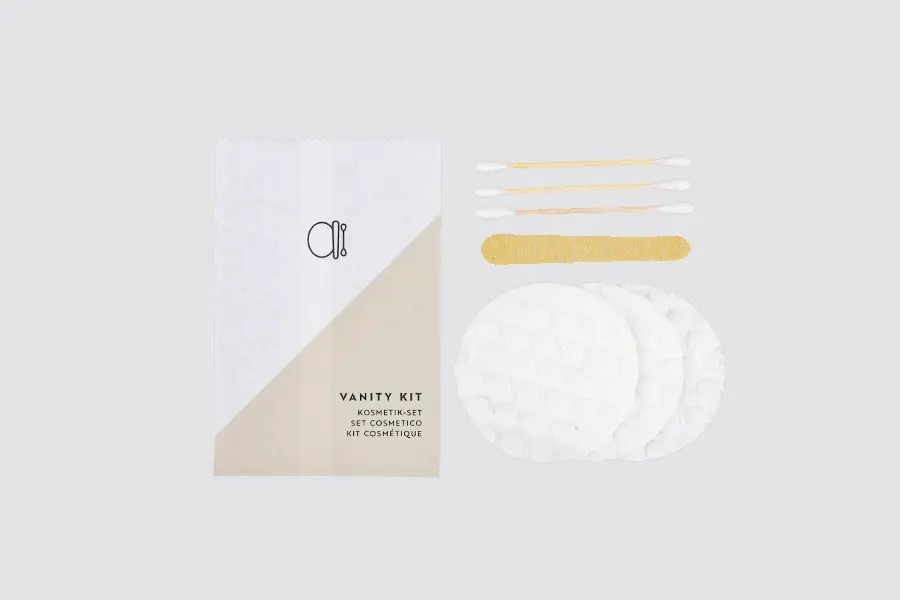
Green Elegant: amenities in a paper sachet
The line for properties that want to leave out the plastic around the amenity. Every item comes individually in a paper sachet printed with soy ink, with the name of the contents in four languages.
Packaging
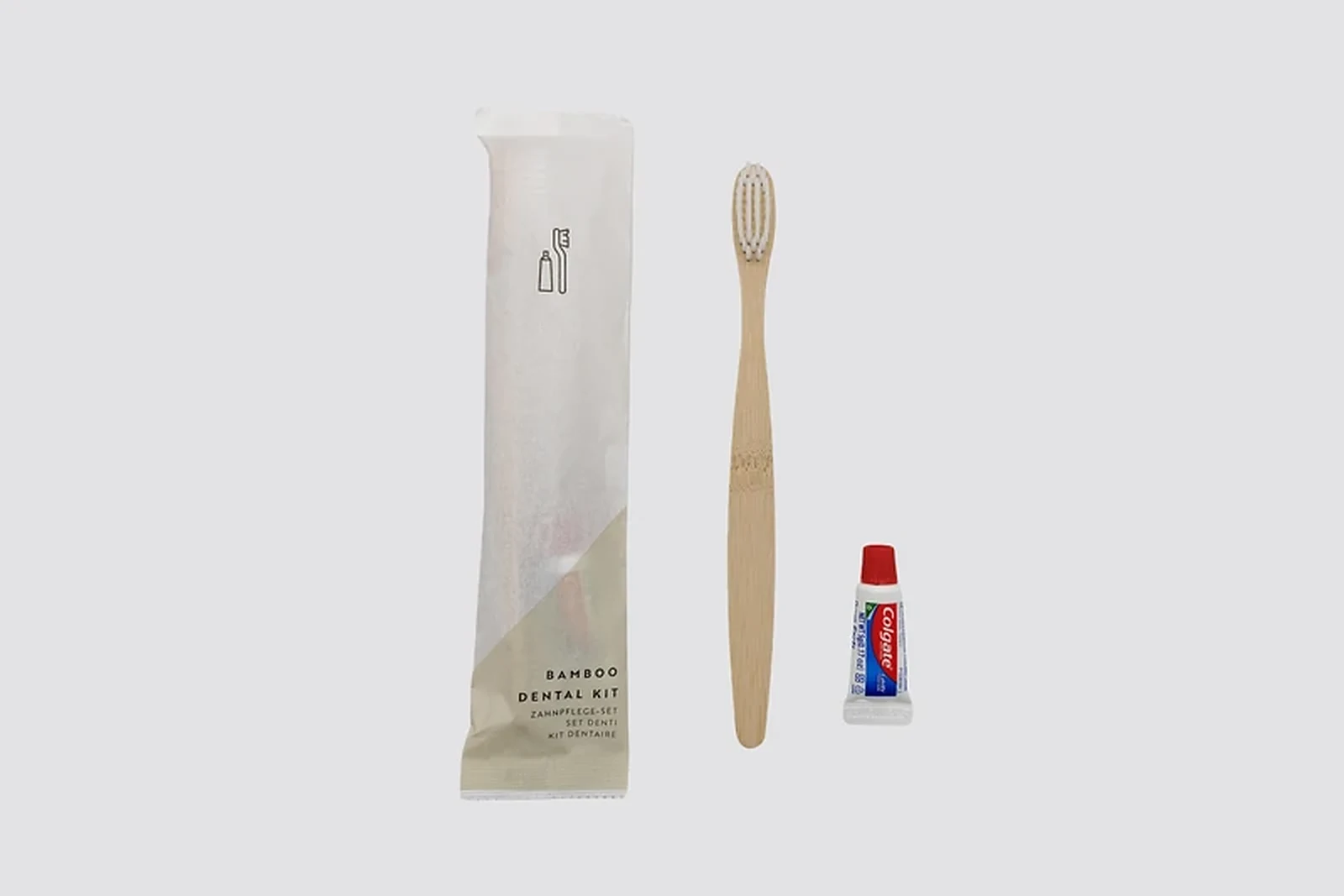
Paper sachet, individually packed, printed with soy ink. Inner packs of 50 to 500 pieces, depending on the item.
Material
Combs and hairbrushes made of bamboo wood, cotton buds with a bamboo stem, toothbrushes with a handle made of bamboo or of 35 percent corn starch, razors with a handle made of bamboo or 35 percent straw, nail cleaner made of bamboo.
Range
Vanity kit, cotton pads, cotton buds, dental kit, shaving kit, manicure kit, sewing kit, comb, hairbrush in three shapes, loofah sponge, sleep mask, earplugs, tissues, shoe shine mitt, shower cap and hygiene bag.
What remains plastic
Shower cap and hygiene bag are made of PLA, the bristle pad of the hairbrushes of TPE. This is stated on every item so that nobody expects otherwise.
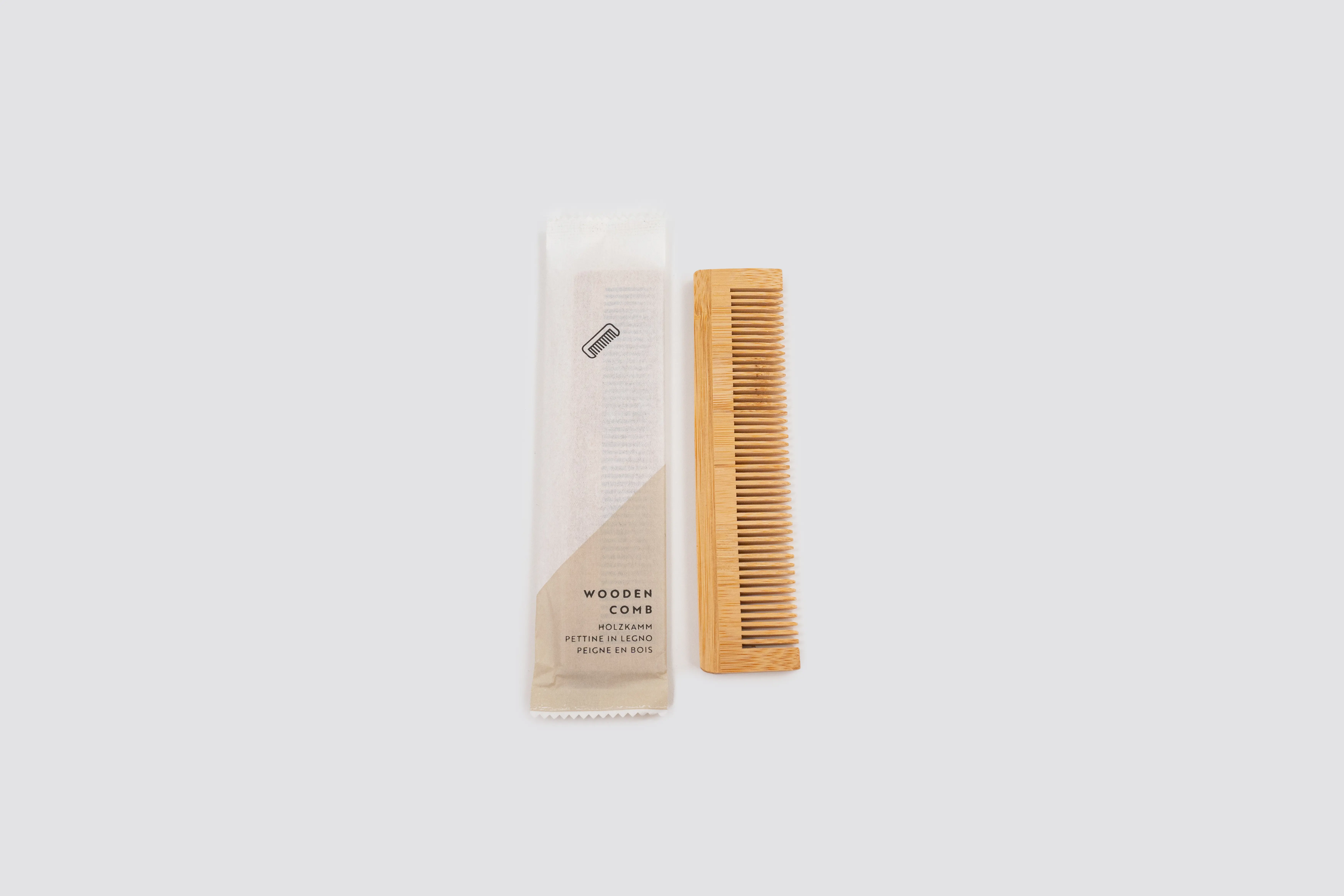
In the hand: The paper sachet is matt, with a beige panel and a pictogram of the contents. It opens without scissors and lies flat on the tray.
Green Classic: the same items in a PLA bag
The sister line with largely the same contents, packed in a transparent bag made of PLA. If you want to see the contents before opening, this is the line.
Packaging
Bag made of PLA, white-transparent, printed with «eco friendly». Inner packs of 50 to 500 pieces.
Material
Cotton buds with a paper stem, toothbrush with a handle made of bamboo or 35 percent corn starch, razor with a handle made of bamboo or 35 percent straw, comb with 35 percent straw, tissues made of cellulose.
Range
Vanity set in two versions, cotton pads, cotton buds, dental kit, shaving kit, sewing kit, comb, nail file, hair tie, loofah sponge, tissues, shoe shine mitt, shower cap, plus laundry bags and remote control bags made of PLA and an amenities box made of cardboard.
What PLA is
PLA is a plastic obtained from corn starch. It feels different from film, but remains a plastic at disposal. If you want to avoid that, choose Green Elegant.
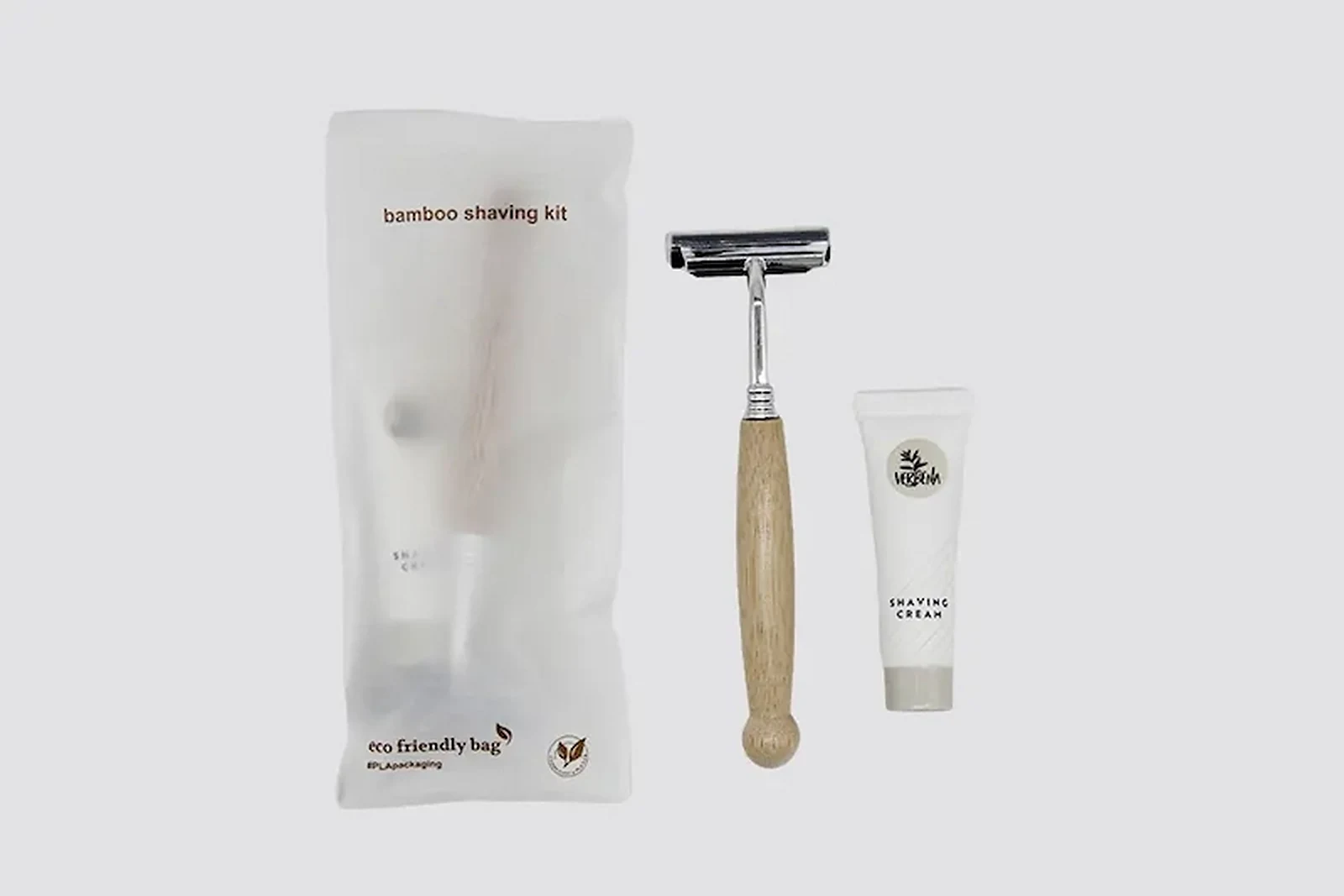
To put it in context: For new fit-outs we recommend the paper sachet. Green Classic remains the choice when the contents should be visible through the wrapper, or when a property already runs the line and does not want to mix.
Green Guest Accessories: what stays instead of being replaced
These items create no waste per arrival because they stay in the room and are washed or wiped down. They replace single-use film bags with cotton, jute, paper and wood.
Bags
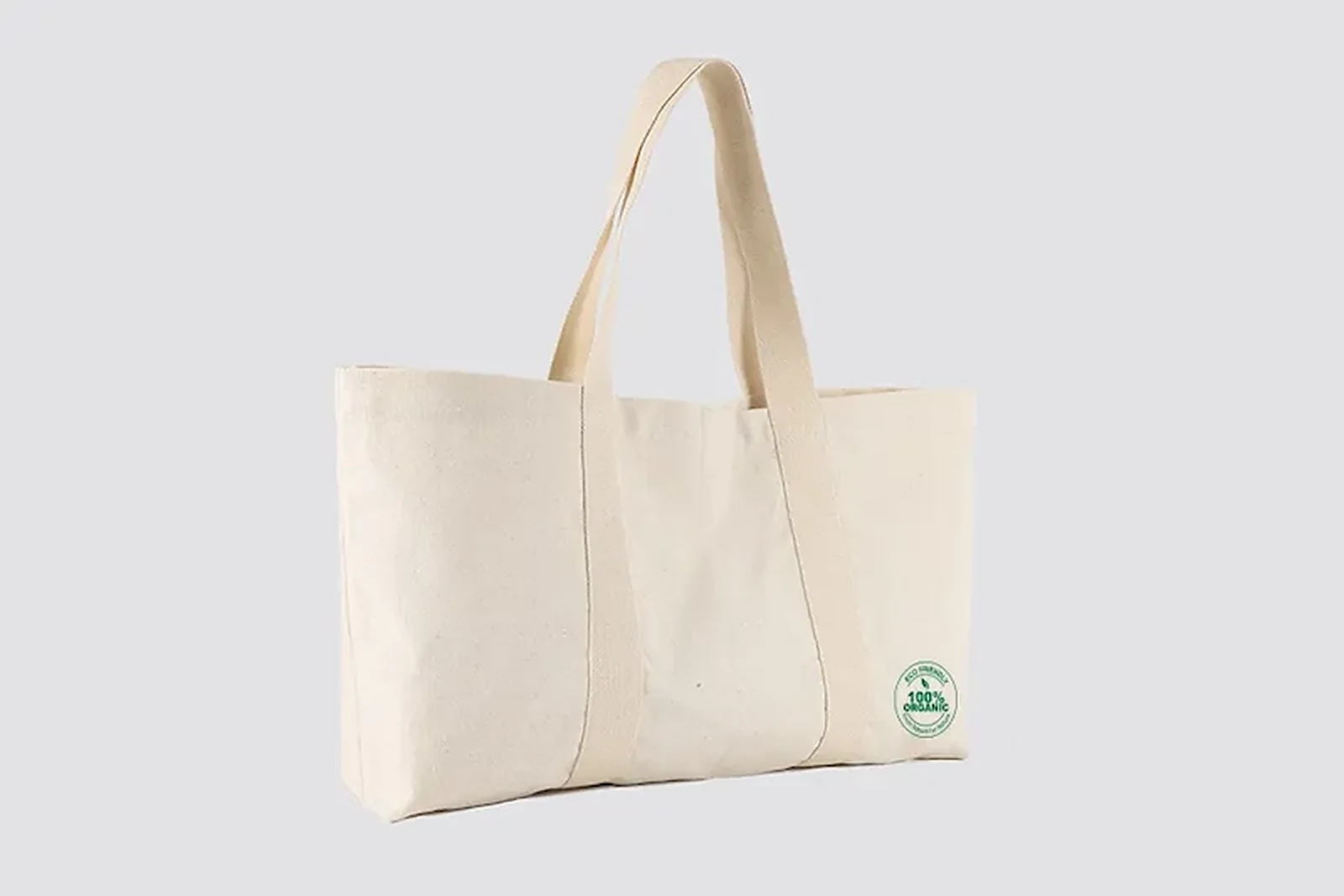
Cotton laundry bags in 38 x 55 and 40 x 60 cm, plus a paper laundry bag. Shoe bag, slipper bag, hairdryer bag and a pouch for the toilet roll, all in cotton with a drawstring.
Bedding
Pillow and blanket storage bags made of cotton with a zip, 65 x 85 cm, for storage in the wardrobe.
Wood and bamboo
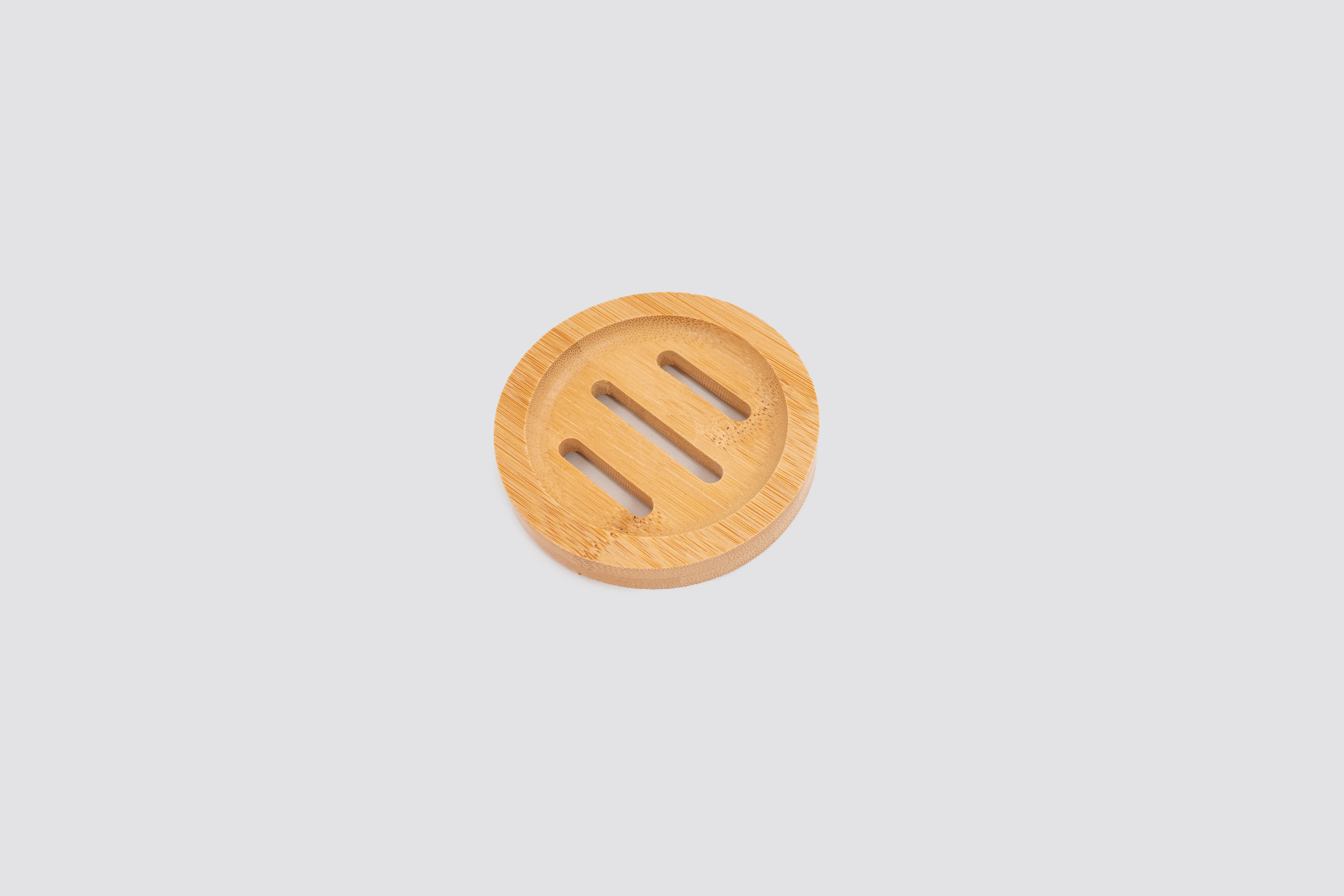
Hangers made of beech or lotus wood with hook, bar or anti-theft ring, wooden shoehorns from 15.5 to 40 cm, soap dishes and a tray made of bamboo.
For the spa
Cotton wellness bag 60 x 29 x 11 cm and jute bags 55 x 36 x 17 cm with an inside pocket, in natural or cappuccino.
Print: Bags carry the print «eco friendly» with the name of the contents, for example «Laundry bag». Your own logo is possible on request.
Green Hotel Slippers: natural fibres, soles made of sugarcane, cork and coconut
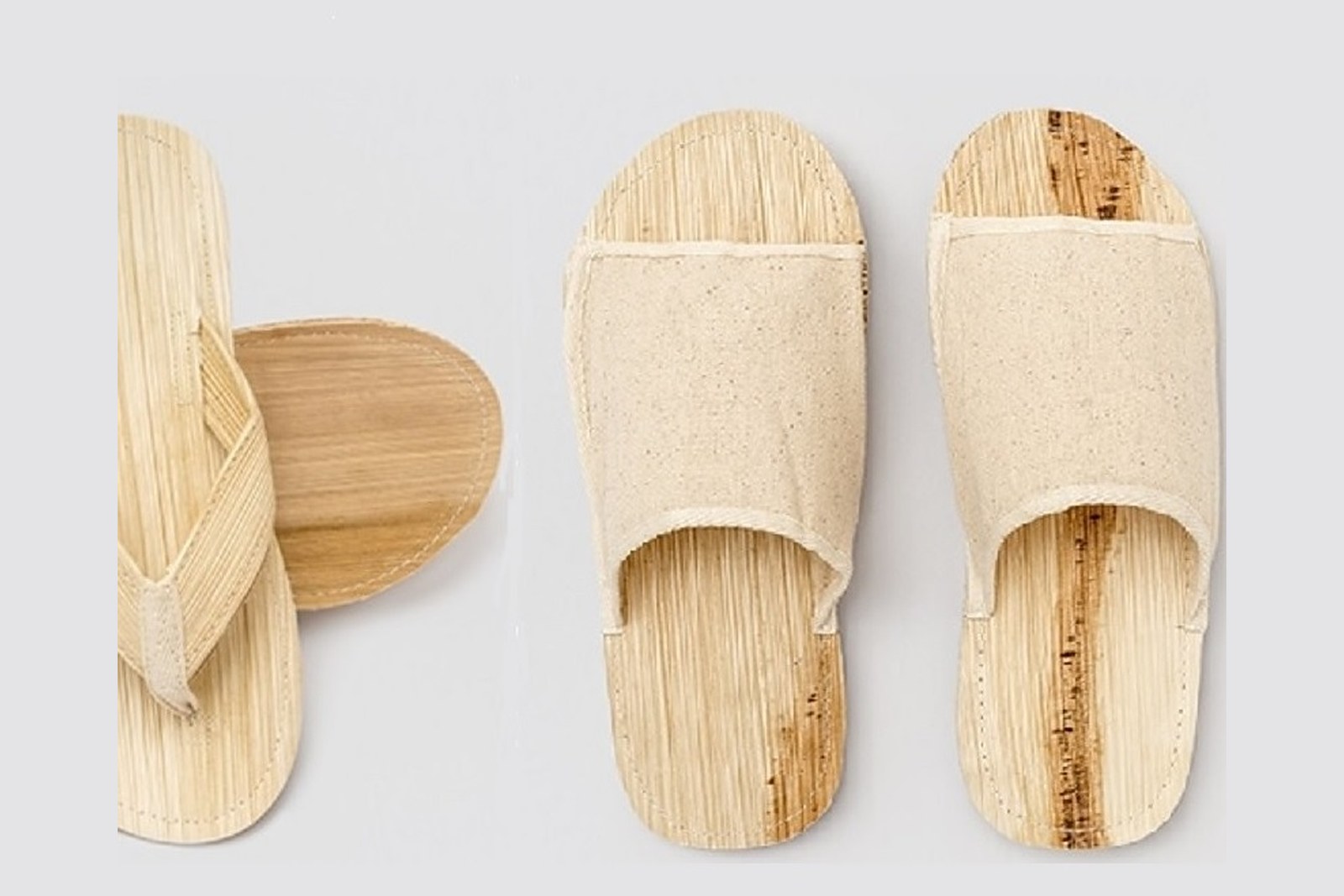
Slippers for the room, open-toe or closed-toe, individually packed in a paper bag. Upper and sole are made of fibres that exist without plastic, and the sole tells you where the slipper belongs.
Upper
Viscose, piqué cotton with cotton fleece, untreated cotton, jute with a non-woven lining, or a blend of 40 percent jute and 60 percent viscose. White or natural.
Sole
Sugarcane on Pinar, Palmira, Havanna and Camellia. Cork on Taxus. Coconut fibre on Babaco. Jute with a cardboard insert on Goa. Cardboard with cotton fabric and plastic dots on Nature-Piquet.
Packaging and sizes
Every pair individually in a paper bag. Lengths 27.5 cm, 28.5 cm and 29.5 cm, depending on the model. 150 to 250 pairs per case.
Use
Dry indoor areas: rooms, conferences, events. For pool, sauna and wet floors, the wellness line is built.
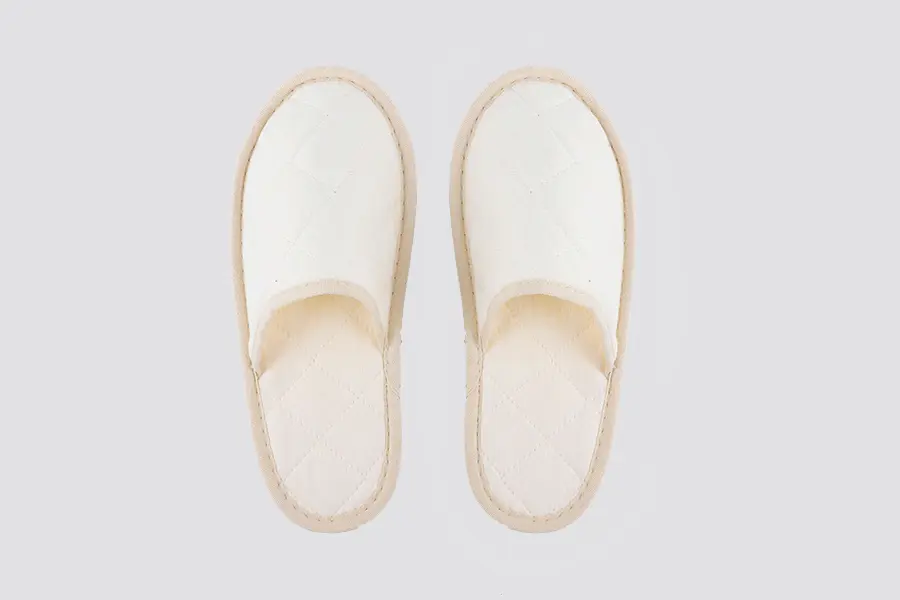
The sole decides: Sugarcane, cork and coconut fibre carry the guest through the room, not through the spa. If you need both, provide two models, one in the room and one in the wellness area.
Green Wellness Slippers: cork and straw for spa and pool
Wet floors need a sole with grip and a footbed made of a material that copes with moisture. This line works with cork, straw and a profiled EVA sole.
All cork
Corteccia open-toe and Corteccia Sandal: upper and 10 mm sole made of cork. Packed with a paper band or flax tape.
Cork footbed on EVA
Cork Sandal, Cork Pool Sandal and Cork Rio: 2 mm cork footbed on an 8 mm profiled EVA sole, straps made of cotton and polyester or mesh. Packed with a loop pin or paper band.
Straw footbed
Bamboo, Bamboo Velcro, Bamboo Cross and Sandal Bamboo: straw footbed, strap in a suede look, 5 mm EVA sole. Packed with a paper band or loop pin.
Shapes and sizes
Open-toe, with hook-and-loop fastening or as a toe-post sandal. Lengths 24 cm, 26.5 cm, 28.5 cm and 29 cm. 100 to 200 pairs per case.
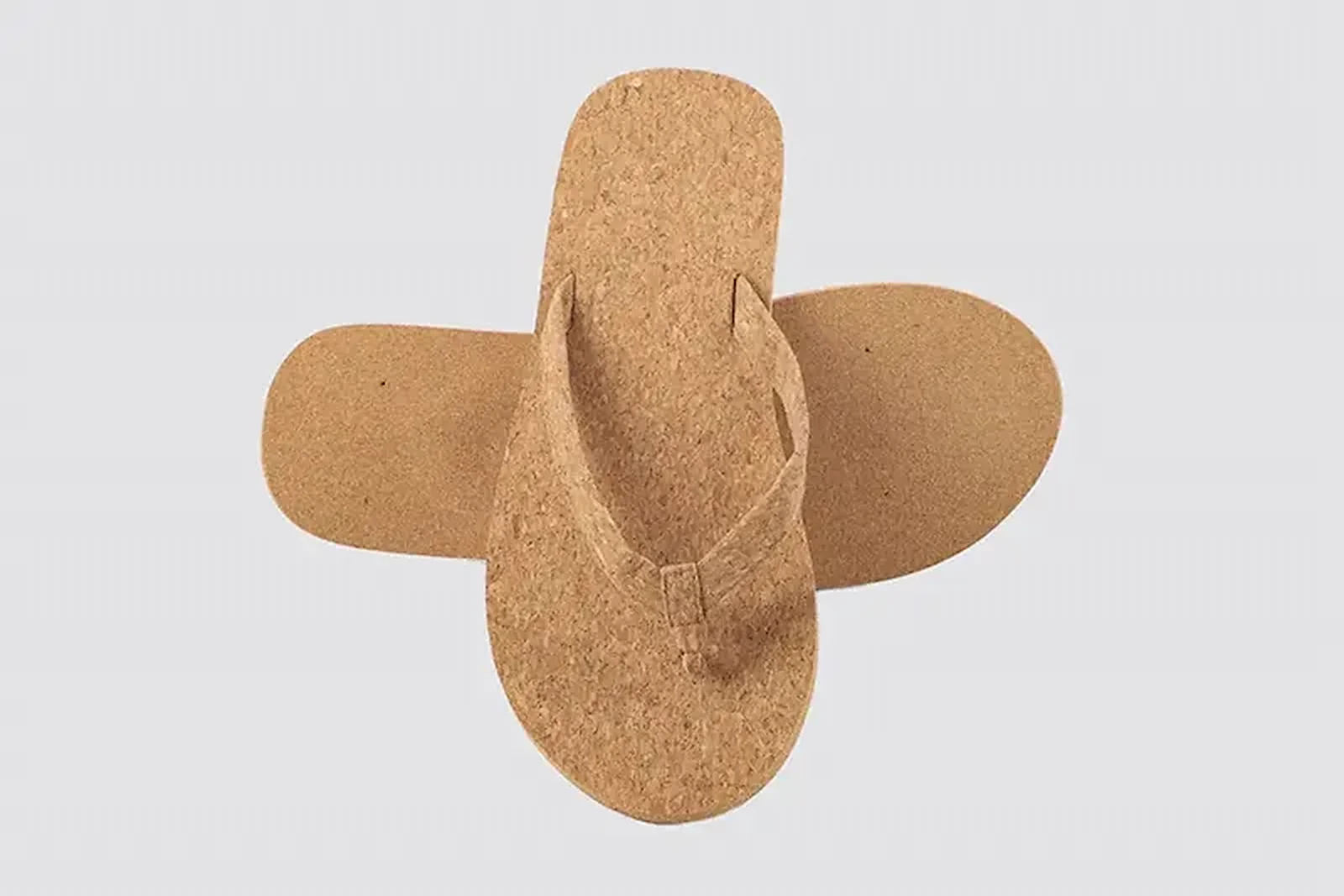
Packaging without a bag: Paper band, loop pin and flax tape hold the pair together without wrapping it. That is less material than a bag, and the pairs lie flat in the case.
Made in EU Slippers: the short route
Here the lever is not the material but the route. Three models are made in the EU and held in our warehouse in Germany.
Three models
Soft, Terry and Plush, all closed-toe, white, 29 cm long, unisex.
Material
Upper made of polycotton, on Plush of polyvelour with polycotton. Binding made of non-woven or polycotton. 5 mm EVA sole with a foam insert, dotted on Terry.
Packaging
Every pair individually in a non-woven bag. 100 pairs per case, 125 on Terry.
Origin
Made in the EU. The Green lines, by contrast, are made for us in China and stocked in Germany, both stated on the item.
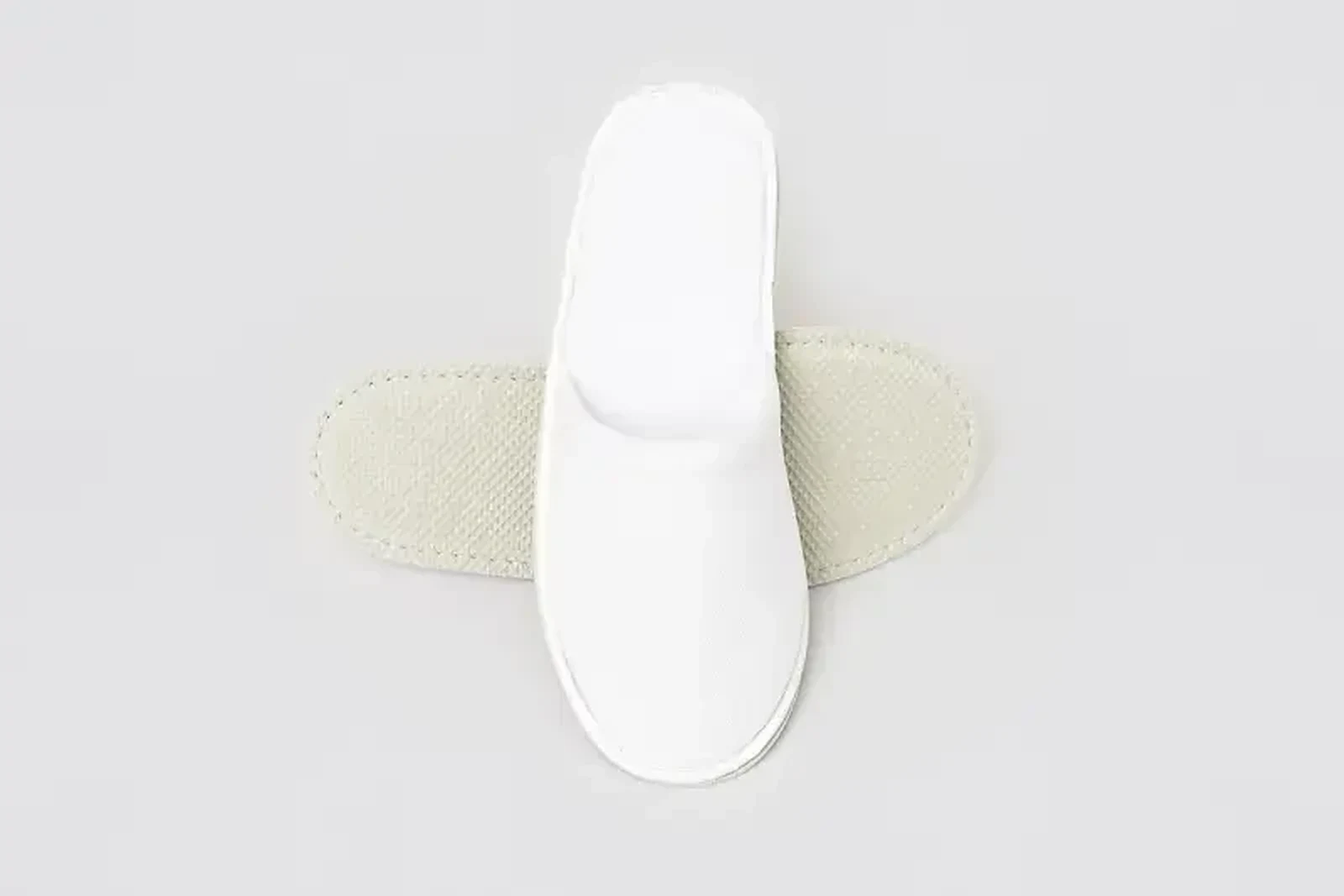
Counted honestly: Polycotton and EVA are plastics. The advantage of this line lies in the transport route and in replenishment from European production, not in the material. If you are looking for natural fibre and EU production in one slipper, you will not find it in our range at present, and we do not claim it either.
What guests notice, and what only your property notices
Sustainability in the room is not read, it is touched. The guest judges the wrapper in their hand, not the concept behind it.
What the guest holds in their hand
- A paper sachet that tears open, instead of a film that has to be cut.
- A wooden comb and a toothbrush with a bamboo handle, both with weight and texture.
- A slipper out of a paper bag, with a sole made of sugarcane or cork that you can see.
- A cotton laundry bag in the wardrobe and a dispenser on the wall instead of miniature bottles.
What only the property notices
- Less residual waste per room once reusable bags replace the single-use ones.
- Fewer reorders when bags, hangers and shoehorns stay in the room instead of disappearing.
- No discussion at reception, because every item states what it is made of.
And the textiles: The guest touches the towel more often than any amenity. What makes good hotel terry is explained on the page Terry towelling for hotel and spa.
Planning purchases in cases
With us the case is the unit for ordering, storage and transport. Knowing how much is in one lets you order to fit your storeroom rather than by feel.
| Line | Per case | Inner packs | Example |
|---|---|---|---|
| Green Elegant | 200 to 3,000 pieces | bundles of 50 to 500 | Vanity kit: 1,000, bundles of 100 |
| Green Classic | 300 to 5,000 pieces | bundles of 50 to 500 | Dental kit: 500, bundles of 50 |
| Green Guest Accessories | 40 to 500 pieces | depending on the item | Hangers: 50, laundry bag: 250 |
| Green Hotel Slippers | 150 to 250 pairs | individually in a paper bag | Pinar: 250 pairs |
| Green Wellness Slippers | 100 to 200 pairs | paper band, loop pin, flax tape | Corteccia: 120 pairs |
| Made in EU Slippers | 100 to 125 pairs | individually in a non-woven bag | Soft: 100 pairs |
What makes purchasing easier
- The number of pieces per case and the minimum quantity are stated on every item in the portal.
- The stock shown is the stock in our warehouse in Germany, in real time.
- From two cases we deliver carriage paid, from our warehouse in Germany.
- Inner packs of 50 to 500 pieces make distribution to floors and trolleys easier.
What makes purchasing more expensive
- Thinking in pieces instead of cases, and then reordering one case every month that is transported on its own each time.
- The same fit-out for every room, although suites and standard rooms are booked for different lengths of stay.
- Buying a year's supply of amenities when the bathroom is switched to dispensers next year.
- Taking slippers from the room line for the spa, although their sole is built for dry floors.
The calculation: Rooms times arrivals per month gives the monthly demand, divided by the pieces per case gives the number of cases. For slippers the method is set out step by step in the guide to calculating demand, and it applies just the same to amenities.
Tell us where your property wants to start
Number of rooms, guest turnover and the places to be changed first are enough for a proposal with case quantities. If you already run one of the lines, tell us which, and we build on it.
Frequently asked questions
What buyers ask us most often about the Green lines.